
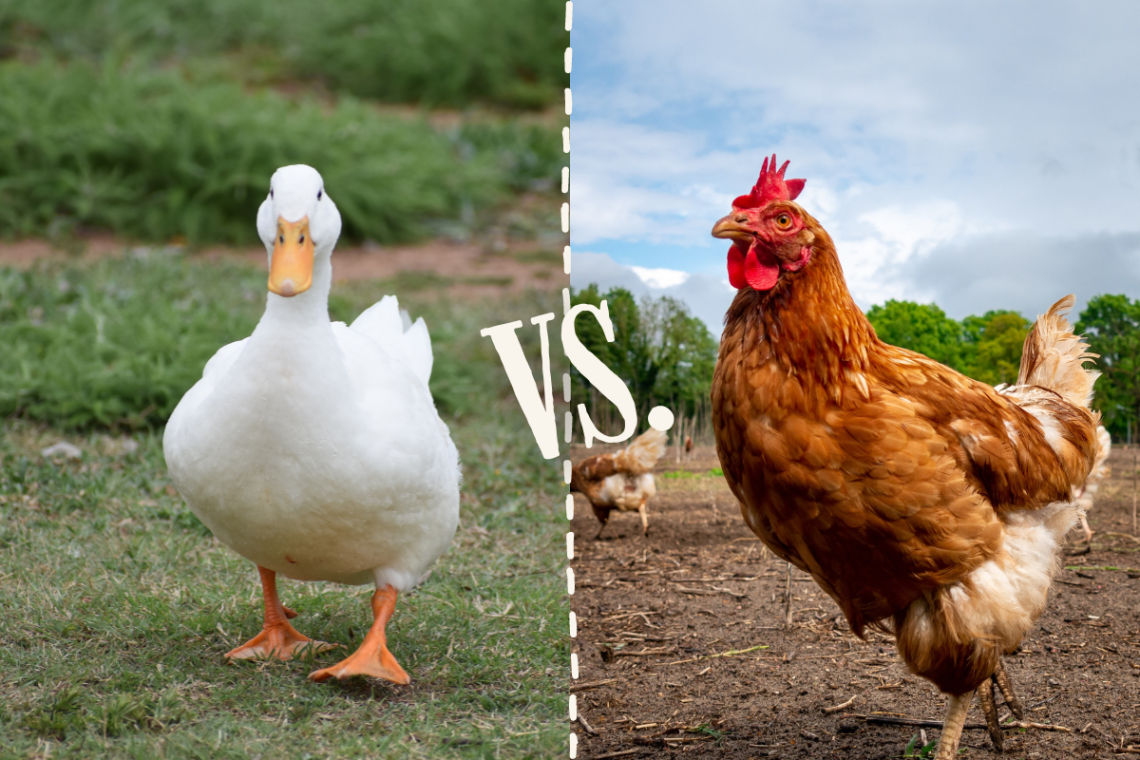
One of the first animals many people choose to add to their homesteads or backyard farms are birds – usually either chickens or ducks. Both are small, relatively easy to care for, and don’t require nearly as much space as goats, pigs, horses, or other livestock.
So you know you want a bird, but what kind? As a duck owner myself, I do have a bias towards ducks. Though, I also have first-hand experience with some of their drawbacks. I’ve also had plenty of experience with chickens on the various farms where I’ve ridden, leased, or boarded horses before moving to my own farm. Based on those experiences, here’s my take on why you might choose ducks over chickens or vice versa.
Benefits of Ducks
After owning my own flock of ducks for several years now, I can tell you that there are quite a few notable benefits of getting ducks vs. chickens. Below are just a few of the reasons you might want to choose ducks.
- Ducks tend to be hardier than chickens. Ducks are more tolerant of very cold and hot temperatures than chickens and are prone to fewer diseases. This makes them a bit easier to care for, especially if you live in an area with cold, snowy winters.
- Ducks are generally quieter than chickens. If you have close neighbors (or local ordinances against having roosters), ducks may be the better fit for you. Most breeds of ducks are on the quieter side, and some are known for not making much noise.
- Ducks have a less aggressive pecking order than chickens. While ducks can occasionally display dominant behaviors, they don’t enforce a strict pecking order. Introducing new birds into your flock can be more difficult with chickens because they can be aggressive about establishing their pecking order.
- Duck eggs have more protein and omega-3 fatty acids than chicken eggs. If having farm-fresh eggs is one of the reasons you want to get birds, consider the extra nutrients that are in duck eggs vs. chicken eggs. Additionally, many people are surprised to learn that they have a low-grade allergy to chicken eggs and do much better with duck eggs.
- Ducks can eat just as many bugs in a day as chickens. I was surprised to find out that ducks can be just as effective at keeping bugs at bay on the farm as chickens.
Drawbacks to Ducks
Despite their many benefits, ducks do come with a few notable drawbacks that can make having them in your backyard a challenge.
- Ducks must have a large source of water. Ducks are waterfowl and therefore need to have access to a body of water deep enough for them to at least dunk their heads and bathe in to stay healthy and happy. This adds time and extra physical labor to your daily routine, especially if you don’t have a water spigot located close to your coop.
- Ducks are messy. There’s no doubt about this one – ducks make a mess! They love to drill their beaks into the mud looking for bugs and will make short work of any water source, be it a waterer, a pool, or even a pond.
- Ducks need more space than chickens. In addition to needing somewhere to swim, ducks also need more room to roam and stretch their feathers than chickens. Inside the coop, ducks only use floor space and don’t roost up high like chickens, so you will need a larger coop to house them.
Benefits of Chickens
Chickens are a popular choice for farms and homesteads for a reason – well, quite a few reasons! Below are just some of the benefits of owning chickens.
- Chickens don’t need a large water source. With chickens, you’ll just have to provide clean drinking water, not a large pool or pond like with ducks. If you’re not able to provide a place to swim, consider choosing chickens over ducks.
- Chickens can thrive in a smaller area than ducks. While chickens still need some room to roam (and I don’t recommend a “chicken tractor” for this reason), they generally adapt well to smaller spaces than ducks do. So if you’re working with small acreage, chickens are probably a better fit for you.
- Chickens are less messy than ducks. Without the water and mud that ducks love, chickens make much less of a mess and therefore require less time cleaning up after.
- Chickens are excellent for bug control. Like ducks, chickens can cut down on your property’s bug population. However, if kept in a small space, this benefit can backfire, as bird waste can attract flies and other bugs.
Drawbacks to Chickens
Chickens aren’t without their drawbacks, either. A few reasons you might want to opt for ducks over chickens include:
- Chickens aren’t as hardy or weather-tolerant as ducks. Chickens can be more susceptible to illness and disease than ducks are, and they are not generally as tolerant to hot or cold temperatures as most ducks.
- Chickens can be loud. If you plan to have roosters, prepare for noise. Some neighborhoods even have ordinances against having roosters or limit the number of roosters you can have.
- Chickens can be aggressive about pecking order. Chickens take their pecking order very seriously and can become quite aggressive about it. This can make introducing new chickens to the flock a challenge, especially if you have limited space.

Can You Mix Chickens with Ducks?
Yes, chickens and ducks can live harmoniously together if you can’t decide between the two. However, there are some unique challenges to consider when housing ducks and chickens in the same enclosure.
- Ducks need water, but chickens try to stay dry at all costs, since they do not have waterproof feathers. If you are going to keep chickens and ducks together, you’ll need to have enough space to provide water for the ducks and still have ample dry space for the chickens.
- Ducks and chickens have different nutrition needs, so you will need to customize your feeding routine to meet the needs of both birds.
- Ducks and chickens have different housing needs. Ducks will need a ground-level entrance to the coop, as they don’t do well with steep ramps. Chickens, on the other hand, prefer to roost in raised nesting boxes.
- Mating can be problematic in a mixed flock. Drakes (male ducks) can be very aggressive when mating and may even attempt to mate with a chicken, which can be dangerous or even life-threatening for the chicken. If your goal isn’t to raise chicks or ducklings, consider an all-female mixed flock to avoid this issue.
Which Is Better: Ducks or Chickens?
Although I have a personal sweet spot for ducks, my answer to the “ducks vs. chickens” debate is unbiased: Choose whichever bird is the best match for both your goals and the space you have.
If you have the space for and are prepared for the extra work it takes to maintain a clean swimming area, ducks can be a fun and beneficial addition to your farmstead. If you don’t want the headache of maintaining a water feature, chickens can be a great choice, too.


