
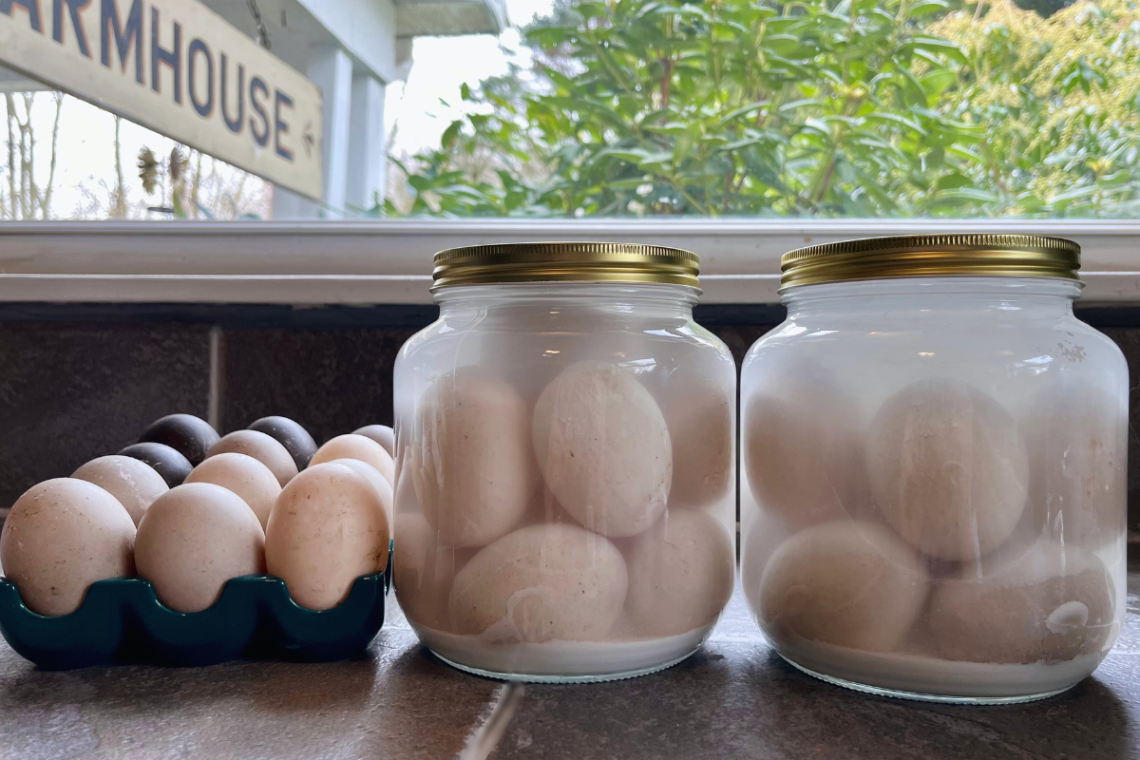
Water glassing eggs is an easy, effective method of preserving farm fresh eggs for as long as 1 to 2 years. This preservation method dates back to the early 1800s and is still used by many homesteaders and family farms today. And the best part? The process is so simple and only takes a few minutes and few supplies. Here’s how to water glass your eggs from start to finish in three simple steps.
What You’ll Need
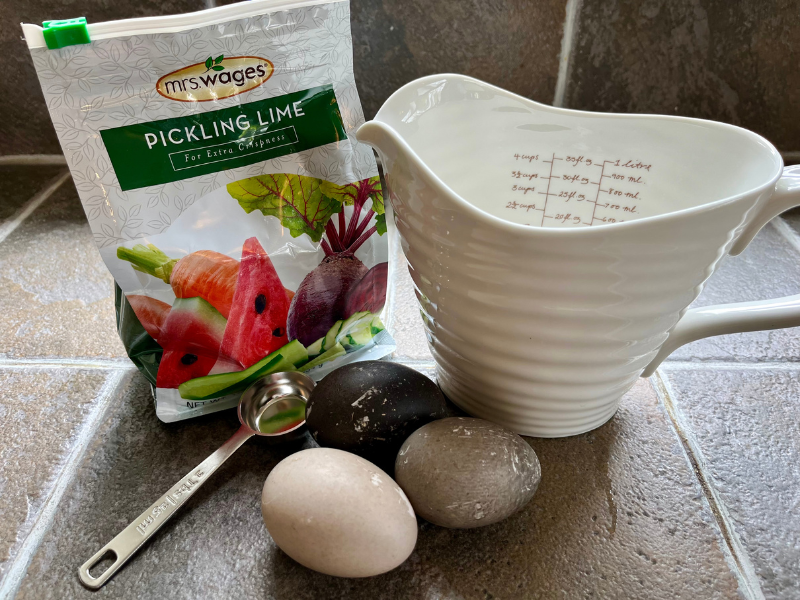
This list has enough supplies to water glass 10 to 12 large duck eggs. You can adjust the recipe to water glass more or less, depending on how many eggs you have. Note that chicken eggs are generally smaller than duck eggs, so you should be able to fit more chicken eggs per jar.
- 1 half-gallon airtight jar
- 5 cups of distilled water
- 1 ¼ ounces of pickling lime
- 10 to 12 clean, unwashed duck eggs (or chicken eggs)
3 Steps to Water Glass Fresh Eggs
1. Measure the pickling lime and add it to your jar.
The most accurate way to measure the lime is to use a food scale, but if you don’t have one handy, 1 ¼ ounces of pickling lime is equal to about 3 tablespoons. Once you’ve measured it out, add the lime to the bottom of your clean half-gallon jar.
2. Add the water and stir.
Next, add 5 cups of water to the jar along with the lime. This should leave just enough room to add the eggs without spilling over, but you may need to adjust slightly depending on how large your eggs are.
Give the lime and water mixture a good stir. The solution should look cloudy. However, the lime will not dissolve in the water and will eventually settle on the bottom of the jar. This is absolutely fine.
3. Add the eggs and seal your jar with an airtight lid.
Carefully start adding the eggs to the jar one-by-one, pointy side down. Some of them will inevitably end up on their sides – that’s okay. But you want to try to arrange them pointy side down as much as possible. It is crucial that none of the eggs break during this process, as one broken egg can spoil the whole jar.
Once all of the eggs are in the jar, put on an airtight lid and store the jar in a cool, dark place.
Frequently Asked Questions
Do you have to use farm-fresh eggs for water glassing?
Yes, your eggs must be fresh and unwashed in order for water glassing to work. Store-bought eggs have been cleaned and the protective blooms removed from the shell. It is this bloom that allows water glassing to “seal” the pores in the eggshell shut, preventing bacteria from getting inside and spoiling the raw egg. Thus, do not use store-bought eggs for water glassing!
Can you use tap water to water glass eggs?
It is best to use distilled water for water glassing, because distilled water is free of chlorine, fluoride, and minerals that could interfere with the preservation process. If you only have tap water available, run it through a high-quality filter that removes chlorine and fluoride, or boil the tap water for at least 15 minutes. If you do this, however, you will need to allow the water to come back up to room temperature before water glassing your eggs.
How do you clean eggs before water glassing?
It is crucial that you do not wash your eggs before water glassing them, as that will remove the protective bloom covering the shell. Instead, you can dust off any small bits of dirt or shavings before water glassing. However, the best method is to use only your cleanest eggs for water glassing. Regularly clean your coop to ensure clean eggs!
How do you tell if water glassed eggs are bad?
There are two main ways to easily spot a bad egg after it’s been water glassed: 1) it will smell bad and 2) it will float. You can’t miss a foul-smelling egg, so if anything smells off when you open the jar, that is red flag number-one that your eggs could be bad. If you’re still unsure, put the egg in a glass of water and see if it floats. Bad eggs float, good eggs sink.
How long can you store water glassed eggs?
Water glassed eggs easily store for about 12 to 18 months. However, some can last for as long as two years, provided they were preserved and stored properly. To optimize the longevity of your water glassed eggs, store the jars in a consistently cool, dark, and dry area. Basements or root cellars can work well for this, as long as they are not too damp.
How do you eat water glassed eggs?
Before using water glassed eggs, it is very important that you thoroughly wash the lime solution off, because pickling lime is not edible and can make you sick if it ends up in your food. Otherwise, water glassed eggs can be used just like fresh eggs: hard-boiled, scrambled, over-easy, etc.
Bottom Line
Water glassing eggs is an easy task for a beginning homesteader and is a safe, effective way to preserve an abundance of spring eggs for the slow winter season. Just make sure you are using farm-fresh, unwashed eggs to ensure the bloom is still intact.


