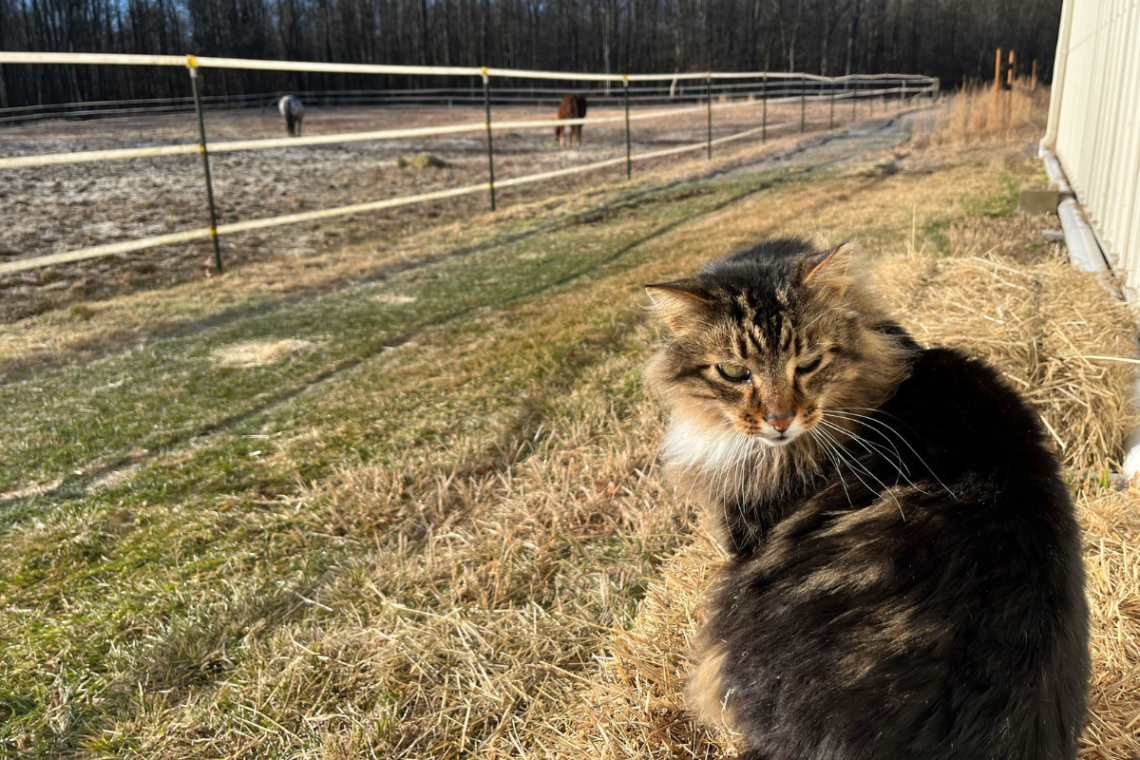
If you have a new farm or homestead, you might be looking for a working cat, or semi-feral cat, to help take care of a pesky rodent population. This can be a great win-win for both you and the cat: You get some help taking care of rodents around the farm, and the cat gets a safe home. Many local cat rescues have “barn cats” available who are best-suited to an outdoor home. However, it will take some time to acclimate your new cat to his new home on your property. Here’s how to do it so your cat sticks around and eventually trusts you.
Supplies You’ll Need
While cat rescues will often help you with some of the supplies and may even loan you a crate, it’s best to be fully-prepared before your new feline arrives. Here’s a complete checklist of what you’ll need:
- Large pet crate
- Food and water dishes (ideally the kind that attach to the side of the crate)
- Disposable food dishes for wet food
- Dry and wet cat food
- Small litter box
- Cat litter or pelleted horse bedding
- Litter scoop
- Small cardboard box or other hiding spot to place inside of the crate
- Blanket or straw to place inside the smaller box
- Towels or sheets to place over the entire crate
The Setup
You will need to keep your new cat confined to this setup for the next several weeks to ensure he learns that this is his new home. To do this successfully, follow these steps:
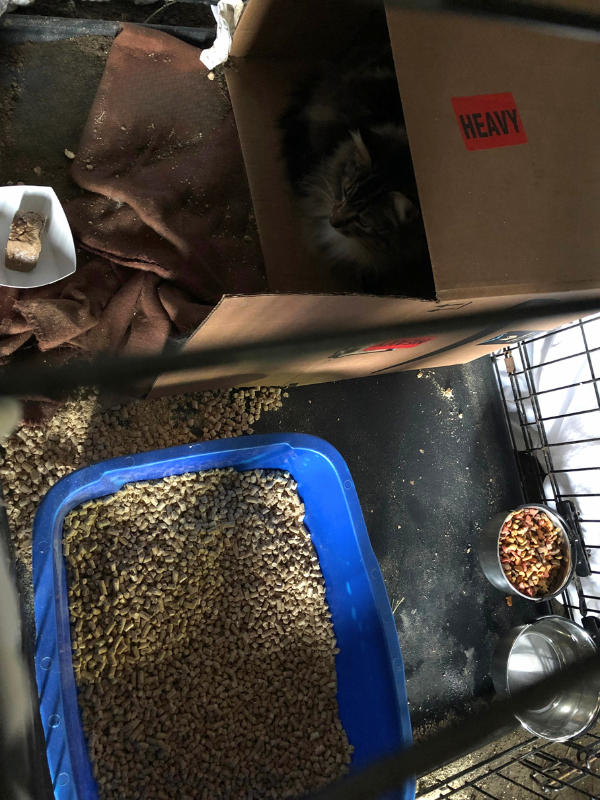
- Set up the large crate in the area where you will want your cat to call “home base” once released. This is usually a barn or other outbuilding.
- Inside the larger crate, place the small box to serve as a den or hiding place for the cat. This box should be placed in the back of the crate, with the opening facing the side of the crate, not the front. This way, the cat can feel hidden while you open the crate door to clean the litter box and provide food and water.
- Set up food and water bowls inside of the crate, towards the front so you can easily access them. I have found it is best to get the kind that attach directly to the side of the crate so that your cat can’t constantly tip them over.
- Set up the litter box at the front of the crate near the door so you can easily reach in and clean it.
- Drape a sheet or towels over the top and sides of the crate to create an enclosed, safe feeling for your cat. You can leave the front uncovered until your cat is safely inside. Once the cat is inside, you can also cover the front of the crate for the first few days. As your cat warms up to his new environment, you can start leaving the front uncovered.
The First 2 to 4 Weeks
Your cat will live in this set up for the next two to four weeks. He needs to stay confined until he starts to feel comfortable in his new environment and is out of “fight or flight” mode from the shock of his move. During this time, it is crucial that you provide 24/7 access to food and fresh water inside the crate and keep up with cleaning his litter box daily.
In addition to meeting these basic needs, you can provide some wet cat food or other high-value treat each day to help your cat associate you and your voice with the pleasant treat. I’ve found that using disposable paper dishes works best for this.
Talk to your cat so he also learns your voice. As he warms up to you, he may allow you to pet him, but he also might hide from you or even try to swat at you. Let him make the first move and do not push him to accept you before he’s ready.
The Release
When your cat starts showing signs that he trusts you and is comfortable in his new environment, you can release him by opening his crate door. Some signs that your semi-feral cat is ready to be released include:
- Your cat is spending more and more time outside of his den during the day.
- Your cat appears to be lounging comfortably in his crate and does not look scared or like he is hiding.
- Your cat has started playing with toys you’ve given him or other items in the crate.
- Your cat will eat, drink, or use the litter box in front of you, instead of waiting for you to leave.
- Your cat is purring or meowing at you.
- Your cat lets you pet or interact with him.
Once your cat is showing these signs, plan to release him during the day. Give him his wet food in his crate in the morning, leaving the crate door open when you do. Allow your cat to venture out of the enclosure on his own – do not force him out! While you can stay nearby, give him enough space so that he doesn’t feel trapped or threatened.
Your cat might bolt out right away or he might more cautiously make a move. Depending on his personality, he might even come up to you. If he doesn’t, however, don’t force an interaction. Let him decide what he wants to do.
Bear in mind that it is possible your cat could disappear for a day or even a few days after being released. Don’t worry – he now knows where to find food, water, and shelter and will come back when he’s hungry. You can set up a trail camera to see if he is coming back at night and staying away during the day, as this is a pretty typical pattern for feral or semi-feral cats. Over time, he will become less afraid and start to stick around.
Post-Release
After releasing the cat, leave the crate set up for at least another week so he has the option of coming back to it if he wants. After a week or so, you can phase out this setup, but replace it with an outdoor cat house. You can make a cheap and easy one out of a plastic storage container, a Styrofoam cooler for insulation, and some straw. Never use hay, blankets, or other absorbent materials for bedding for your outdoor cat, as these can freeze and prevent your cat from getting warm.
Make sure food and fresh water (unfrozen) are always available. Place these items in the same spot or very close to where the crate was. If you want to move your cat’s feeding location in the future, do it gradually so he’s able to find it.
When Will My New Cat Let Me Pet Him?
It can take years, quite literally, for a semi-feral cat to trust you enough to allow you to get close enough to pet him. It took my cat two years before this happened, and then another year or two before he allowed my husband to pet him. He still runs away from other humans and probably always will. So even if your cat isn’t showing up during the day or isn’t letting you near him, keep supplying him with food, water, and a warm, dry shelter and he will eventually come around.
How to Get a Feral Cat to Stick Around
You might quickly find out that feral or semi-feral cats have found your property on their own, especially if you have food out for your own cats. If you want them to stick around to aid in controlling the rodent population, you can put out wet cat food in the same place and around the same time each day. Over time, the feral cat will learn that he can find food there and will regularly stop by.
In my experience, however, truly feral cats may never trust humans enough to be captured or pet. If you find yourself with a stray cat population, it is best to try to humanely trap them and bring them to the vet to be spayed or neutered and ear-tipped (so others know this cat has been fixed) to prevent litters and litters of kittens in the future.
Bottom Line: Should I Get a Working Cat?
A working cat can be an excellent addition to your farm or homestead. In addition to catching mice, moles, and other rodents, these cats can be a friendly and welcomed companion to have around. Outdoor cats can thrive in the right environment if provided with ample food, water, and shelter. In fact, a barn or outdoor “working” environment is often the only rehoming option for many feral or semi-feral cats that come through a rescue’s doors, making this a win-win situation for both you and the cat.