If you have horses, cows, chickens, or other farm animals, flies are public enemy number one. While fly traps and strips can help to reduce the number of flies buzzing around at any given moment, these solutions do little to actually control the fly population around your farm. To address the problem upstream, you ideally want to kill the larvae before they hatch into flies in the first place.
Enter fly predators. These harmless insects do just that – kill fly larvae so you have fewer flies to contend with in peak season. But are fly predators worth it? Here’s my take, after having used the little bugs for several years.
What Are Fly Predators?
Like their name suggests, fly predators are the natural predators of flies. They are technically a species of parasitic wasp, but are non-biting and non-stinging and totally harmless to people and animals. Female fly predators lay their eggs inside immature fly pupa, essentially killing the fly before it matures. While this might sound a bit gruesome, let me remind you of the constant fly masking, spraying, and treating of ongoing skin irritations and allergies all summer long. Sorry, flies, I choose my horses’ comfort.
Pros of Fly Predators
Fly predators come along with a variety of unique benefits that set them apart from traditional fly traps or sprays:
- Fly predators stop the problem at the source by targeting pupal flies before they mature.
- They do not smell or need constant maintenance like fly traps and strips.
- Results are cumulative – once you begin using them, you should see fewer and fewer flies each year.
- Fly predators are cost-effective compared to the cost of fly trap replacements and fly spray.
Cons of Fly Predators
As with just about anything, there are a few drawbacks to using fly predators, too:
- Fly predators need to be released each month during the warmer months.
- They can be easy to forget about, since you need to wait until they start hatching to release them.
- They can take years of consistent use to really put a dent in fly populations.
Do Fly Predators Work?
In my experience, yes, fly predators do work, but they are a bit of a long game. As I stated above, it can take a few years of consistent use before you start seeing a significant reduction in fly populations. That said, I did notice fewer and fewer flies each year using fly predators, so I do believe they begin working the first time you try.
Don’t expect to be able to ditch your fly traps completely, though. I find that a combination of yearly fly predators and strategically-placed fly traps is the best formula for maximum fly destruction.
How Long Do Fly Predators Take to Work?
For initial results, it can take several weeks before you start noticing a reduction in flies around the farm. But for longer-term and more dramatic results, it can take a few years of using fly predators to really start to notice a dent in fly populations.
Where’s the Best Place to Put Fly Predators?
One of the keys to seeing the best and quickest fly predator results is to place them correctly around your farm. Spread fly predators around manure piles, near stagnant water, or in muddy areas – all places that heavily attract flies. You don’t necessarily want to spread them in the areas where flies bother you the most, such as in the barn or even in pastures, unless you have lots of manure or muck in these areas. The key is to target the areas where flies are laying larvae before they hatch.
How to Use Fly Predators
Using fly predators is just about as simple as simple gets:
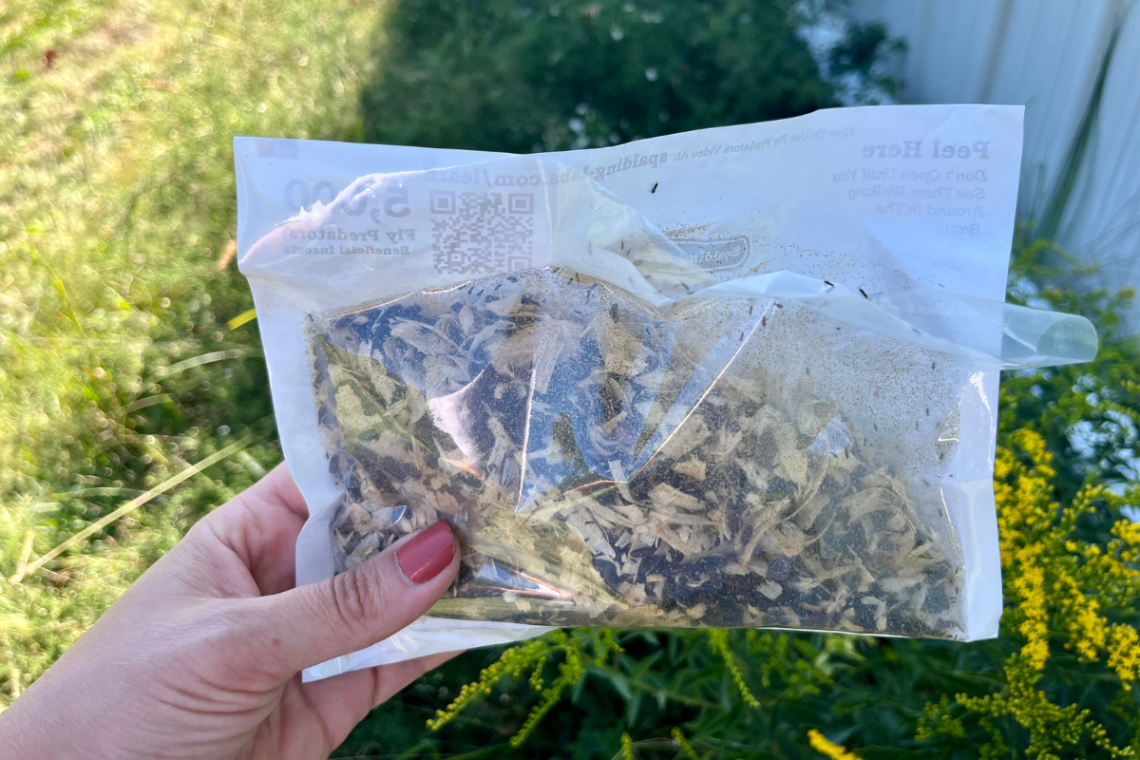
- Upon arrival, let the fly predator bag sit in a dark, cool area until they start to hatch. You’ll start to see tiny black bugs moving around inside the bag when they are ready to be released.
- Identify the best areas around your farm to release fly predators – near manure piles, mud, or standing water. Take the bag to the spot where you’d like to release them and peel away the paper backing.
- Sprinkle them around the area, being sure to dump the whole bag.
- Repeat this process every month as each shipment arrives.
Where to Get Fly Predators
I use Spalding fly predators, but there are a number of online sources available. I have had good experiences with Spalding, so I continue to use them. They tell you how many fly predators you need based on how many and the type of animals you have and then they figure out the shipping schedule for you. All you have to do is make sure you spread each bag as they come.
Bottom Line: Fly Predators Are Worth a Try
Fly predators are absolutely worth trying if you have horses or other animals that are easily bothered by flies. Large amounts of flies around your farm are no joke – not only are they annoying, but they can also carry a whole host of nasty diseases and some can cause allergic reactions in your herd.
I recommend sticking with fly predators for at least two years before assessing their results, since it can take some time to start putting a big dent in big fly populations.